Showing posts with label East Africa. Show all posts

Monday, 10 September 2012

KENYA: RENEWED VIOLENCE LEADS TO FEARS OF A REPRISAL OF 2007’s DEADLY CONFLICT


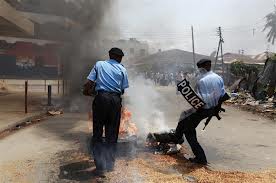
Last week’s discovery by the Kenyan authorities of over 150 explosive devices in the country’s capital city of Nairobi indicates that the country’s battle against Islamic militants is far from seeing its end. Close observers of Eastern African affairs recall last year’s Kenyan incursion into Somalia aimed at deterring the Somalia-based Islamist group, al Shabaab, who were alleged to have been behind a spate of terror attacks on Kenyan soil.

Many Kenyans will probably concur with the assertion that its government’s incursion into Somalia, although well intentioned, has been counterproductive at best and its consequences disastrous at worst. The incursion has also resulted in conflict between the country’s Christian and Muslim populations and the recent discovery of explosives will no doubt further compound the distrust between members of both communities.

Tensions were stoked even further last week following the arrest of the Muslim cleric, Abubaker Sharif for his part in inciting violence in the country’s second biggest city Mombasa which led to the deaths of five people. Sharif, a divisive figure who has previous form when it comes to incitement, is alleged to have called on his followers to eliminate senior Islamic figures adjudged to have collaborated with the government, to burn churches and attack police officers.

The spiralling conflict with al Shabaab comes against the background of alarming sectarian violence in Kenya’s coastal regions which have been linked to disputes over resources between pastoralists and settled farmers. Last week’s clashes resulted in the deaths of 11 people and occurred in spite of calls from the country’s leaders, including that of its Prime Minister Raila Odinga, for an end to the violence. Of concern is that the parallel conflicts have the potential to morph into the violent scenes which followed from Kenya’s last presidential elections in December 2007 which led to the deaths of over 1,200 people.

Whilst the government’s attempts to quash the scourge presented by Islamic militants by sanctioning the military exercise in Somalia has been referred to by many as constituting the origin of the present conflict, it is well worth adding that identifying the root cause of the latest violent scenes may not be as simplistic as some would like to think. As was the case in the bloody violence which occurred half a decade ago the fight for limited resources is a major factor and element in this troubling equation which must not be discounted.

Muslim communities who outnumber their Christian contemporaries in the country’s coastal regions complain rather vociferously about losing jobs and land to members of the Christian communities. Adding to these are issues to do with unemployment mostly amongst members of the Muslim community thereby increasing the potential of the radicalisation of youth who feel marginalised and in some cases are reported to have been recruited by the al Shabaab Islamic militia in their battle against the Kenyan government. Perhaps the only certainty in this otherwise uncertain circumstance is that there will be no end to the Kenyan crises until its government adopts a multifaceted approach in confronting its problems as opposed to its current one dimensional modus operandi which fails to address the underlying social, political and economic problems facing its people.

Sunday, 15 July 2012

ETHIOPIA: GOVERNMENT WAGES FURTHER ASSAULT ON FREEDOM OF SPEECH AND EXPRESSION


The principles of freedom of speech and expression came under serious attack in the past week in the East African country of Ethiopia where journalists, opposition politicians and bloggers were sentenced to terms in jail for allegedly conniving with rebels to overthrow the government. The prison sentences imposed on the said individuals ranged from between eight years to life imprisonment.


2009’s Anti-terrorism law

The assault on freedom of speech and expression in the country has slowly gathered steam over the last few years but has intensified since 2009 when an anti-terrorism bill was passed by its parliament. One of the by-product of the provisions of the law would see individuals jailed for up to 20 years if found to have published information which could ‘incite’ terrorist activities. This provision appears to stretch the definition of ‘terrorist activity’ to include the work of journalists, bloggers, artists et al which have the temerity to criticise the government when it falls short of maintaining international human rights standards.


The ‘Convicts’

Needless to say unrelenting opprobrium has been heaped on the decision since the verdicts became public knowledge not least because the Ethiopian government has serious form when it comes to incarcerating individuals who voice any forms of dissent against it. Amongst those jailed in this latest onslaught on freedom of speech were Andualem Arage, an opposition politician from the Unity for Democracy and Justice Party (UDJ) who was jailed for life, along with Berhanu Nega and Andargachew Tsige who also received life sentences in absentia.

Probably the most well known of the individuals jailed is blogger and journalist Eskinder Nega who was sentenced to 18 years in jail. Nega appears to have offended the authorities by having the audacity to challenge the government’s decision to arrest, under the aforementioned anti-terrorism legislation, Debebe Eshetu, an actor in the country who has also been a constant thorn in the government’s flesh. In addition, the said individuals and others who received similar sentences were accused of being members of the US-based opposition group Ginbot 7, which the government has classed as a “terrorist organisation”.


Prime Minister Zenawi

The country is led by Prime Minister Meles Zenawi of the Ethiopian People’s Revolutionary democratic Front (EPRDF) who is currently serving a fourth 5-year term in power following an election victory in May 2010. As has been the case with elections held on the continent, opposition groups refused to accept the decision on the grounds that the elections were not free and fair while international observers chorused in unison that the elections failed to adhere to international standards. Zenawi is said to have been one of the writers of the country’s constitution which was created in 1994. Zenawi has also been the country’s only Prime Minister since multi-party elections were first held in 1995.


Criticisms of the latest convictions

The European Union (EU) has voiced strong concerns about the sentences. The organisation’s foreign policy chief Catherine Ashton averred that the principle of freedom of expression enshrined in the Ethiopian Constitution is somewhat compromised by “a lack of clarity with regards to what constitutes a terrorism offence”. The prominent Non-Governmental Organisation (NGO), Amnesty International added: “The Ethiopian government is treating calls for peaceful protest as a terrorist act and is outlawing the legitimate activities of journalists and opposition members”.


Sound-off

The detainees’ legal representatives appear to have already set plans in motion to appeal the decision of the authorities. Whilst trying to avoid being labelled a ‘prophet of doom’, it is highly unlikely that the appeals will result in the release of any of the convicted persons. One notes that the country is highly dependent on foreign aid for its economic stability as was the case with the East African country of Malawi where democratic ideals were also threatened by the government in similar circumstances. In Malawi threats of withdrawal of foreign aid and the West’s follow through of the threat was sufficient enough to check the excesses of the government. In the same vein it is unlikely that any measures taken by the West, short of those implemented in Malawi, will be effective as a means of preventing further strangulation and stifling of freedom of speech and expression by the Ethiopian government.

Sunday, 22 January 2012

JOINT AGENCY BRIEFING PAPER CALLS FOR CHANGE IN THE INTERNATIONAL COMMUNITY’S RESPONSE TO HUMANITARIAN CRISES


On 18th January, Oxfam and Save the Children released their co-authored report, A Dangerous Delay, which concluded that thousands of needless deaths occurred and millions of extra pounds were spent because the international community failed to take decisive action on early warnings of a hunger crisis in East Africa. It also concluded that humanitarian agencies and national governments were too slow to scale up their response to the crisis as many donors wanted proof or evidence of a humanitarian catastrophe before acting to prevent one.

The report highlighted for example that although early warning systems were forecast about the likelihood of an emergency occurring as early as August 2010, full-scale response was not launched until July 2011 when malnutrition rates in parts of the region had risen substantially and which in turn resulted in increased media attention. Both organisations have called for pre-emptive action in advocating that funding for food emergencies should be sought and released as soon as the crisis signs are clear, rather than the current system which funds large-scale emergency work only when hunger levels have caused unnecessary loss of life and costs in response have increased substantially. The report's recommendations are also backed by other NGOs.

More than 13 million people were affected by the hunger crises in the Horn of Africa. The countries most affected by the crises include Ethiopia, Kenya, Djibouti and Somalia where indications of a crisis was apparent from August 2010 and warnings were sounded out in early 2011 regarding the increasingly concerning humanitarian crises. However donors, agencies and governments failed to respond until after rains had failed for a second successive year, by which time the report states, many had lost their livelihoods, particularly women and children, and millions were in the throes of extreme hardship. The report asserts that the scale of suffering, and financial cost could have been reduced if early warning systems had triggered an earlier more substantial response. As a result of the delayed response to the East African hunger crisis, an estimated 50,000 – 100,000 people were reported to have died. A combined approach of the international community, especially one which seeks to manage the risks and not the crisis, one aimed at reducing the risks and one which is designed to respond to early warning signals will surely have averted the unnecessary loss of life and suffering of the inhabitants of the Horn of Africa.

Unfortunately it is impossible to rule out a recurrence of drought, famine and hunger crises in the Horn of Africa. However one hopes that the international community’s response in the future will be based on lessons learnt from the staggered approach in dealing with previous crises, hence the need for national governments, NGOs, and multi agencies alike to consider in some depth the recommendations of A Dangerous Delay. Amongst others, the report recommends that national governments need to be able to fulfil its responsibilities to people caught up in crises and to demonstrate their leadership.

To this end, African leaders, whose ability to deliver good governance is largely questioned, need to work closely and hand in hand with international organisations and NGOs in order to ensure that the needs of the most vulnerable, usually women and children, are attended to before the situation reaches crises point. In addition, swift responses to early warning signals is stressed coupled with the recommendation that the international aid community needs to undertake preventative humanitarian work on the basis of forecasts. The report also states that donors need to provide more agile and flexible funding which will support a change of focus from reactionary response to humanitarian crises to the more effective pre-emptive action. With a new food crises looming in the horizon, namely in the Sahel region of Africa, it is hoped that the lessons and recommendations of A Dangerous Delay will be implemented by all those concerned to prevent suffering of the scale witnessed in the Horn of Africa.